Why Humidity Can Cause Roofing Problems During Michigan Summers
A storm can roll through Warren or Sterling Heights in one loud hour and leave quiet damage behind. The yard looks fine, the street dries up, and life moves on. Then a few weeks later, a ceiling stain shows up like a bad surprise.
That's the problem with storm roof damage. It often starts small and hidden, then turns into leaks, mold, stained drywall, and bigger repair bills. Water doesn't follow the rules, it travels along decking, rafters, and insulation before it shows itself inside.
We help Metro Detroit homeowners get answers fast, without pressure. If you're worried about wind, hail, heavy rain, or ice damage, schedule a free inspection with us. We're licensed and insured, and we'll show you what we see with clear photos and plain language.

Photo by Kelly
The Warning Signs Of Storm Roof Damage We Can Spot From The Ground (And What Needs A Pro)
After a storm, it's normal to want to "just take a quick look." We get it. Still, climbing on a roof right after wind, rain, or ice is risky. Shingles can be slick, soft spots can give way, and ladders can sink into wet ground.
Instead, we suggest a simple split. First, do a safe ground check. Next, let a pro handle the roof-top details.
Here are a few safe checks from the ground we can do as homeowners:
- Look for obvious shingle loss on slopes facing the wind, especially near corners and edges.
- Scan for bent metal at the roofline (drip edge, flashing near walls).
- Check downspouts and splash blocks for overflow marks and fresh washouts in mulch.
- Walk the yard for shingle pieces or piles of granules that look like coarse black sand.
Then, here's what we check up close (without guessing):
- Shingle seals, creases, and punctures, including areas you can't see from the street.
- Flashing and pipe boots around vents, chimneys, and wall lines.
- Valleys and ridge caps, where wind and water stress is high.
- Soft decking spots and early moisture signs before a leak reaches drywall.
If a storm hit hard enough to move patio furniture, it hit hard enough to test your roof's weak points.
Outside Clues: Shingles, Flashing, Gutters, And Yard Debris
From the driveway, we can often spot the "big three" storm problems: missing shingles, damaged metal, and drainage issues.
Missing, lifted, curled, or creased shingles are the clearest sign. Wind can peel tabs up and snap them back down, leaving a sharp crease line. That crease may not leak today, but it breaks the shingle's protection. Over time, water works under it like a pry bar.
Next, watch for granules. If you see a heavy build-up in downspouts or at the end of a discharge line, your shingles may be getting "bald." Granule loss speeds up aging because the sun hits the asphalt layer directly.
Flashing issues matter just as much. Dented vents, bent step flashing, or gaps near the chimney can let water slip in during wind-driven rain. Branch hits can also crack vent boots, even when shingles look fine.
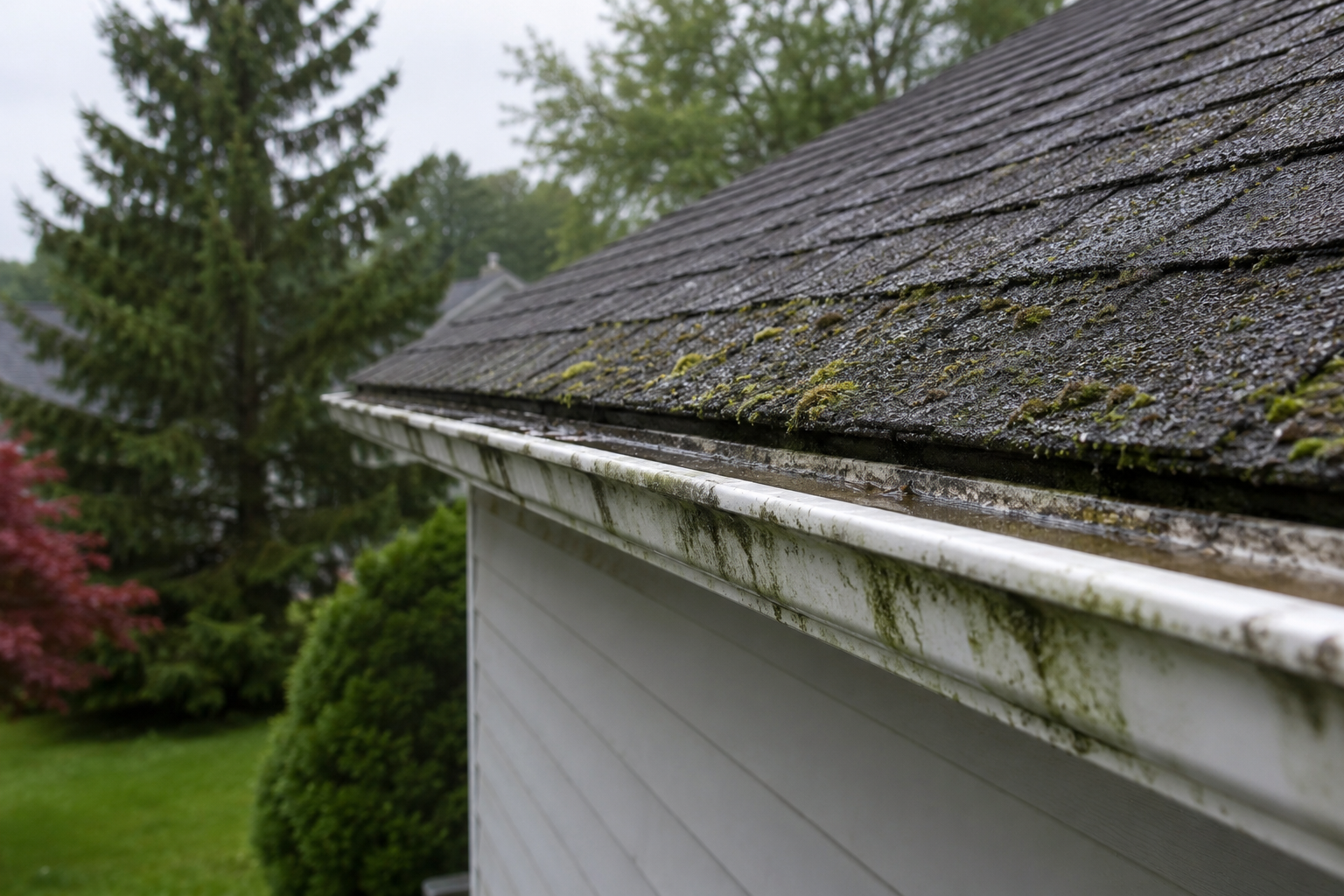
Gutters deserve a close look, too. Loose sections, separated corners, or sagging runs can push water back under shingles and into fascia. That's why storm checks should include your drainage system, not just the shingles. If you suspect damage, our team can also help with seamless gutters for storm protection so water moves away from your home the way it should.
Inside Clues: Ceiling Stains, Attic Moisture, Drafts, And New Odors
Inside signs often show up after the storm, not during it. Many homeowners in Warren call us when they notice a faint brown ring on the ceiling, bubbling paint near a wall, or a damp smell that wasn't there before.
Here's what we take seriously right away:
Brown water spots on ceilings or around can lights, peeling paint, and warped trim are classic leak signals. Meanwhile, damp insulation in the attic can mean water has been entering for weeks. Even a small drip can soak insulation like a sponge, then hold moisture against wood.
Sunlight in the attic is another warning. If you see pinpoints of light through roof boards, you may have a hole, separated decking, or a damaged vent area. Drafts can also increase after storms because wind can open gaps around flashing, ridge vents, and attic penetrations.
One important "don't wait" note: water can travel far from where it enters. In other words, the stain you see might be several feet away from the real opening. That's why we inspect the whole system, not just the room with the spot.
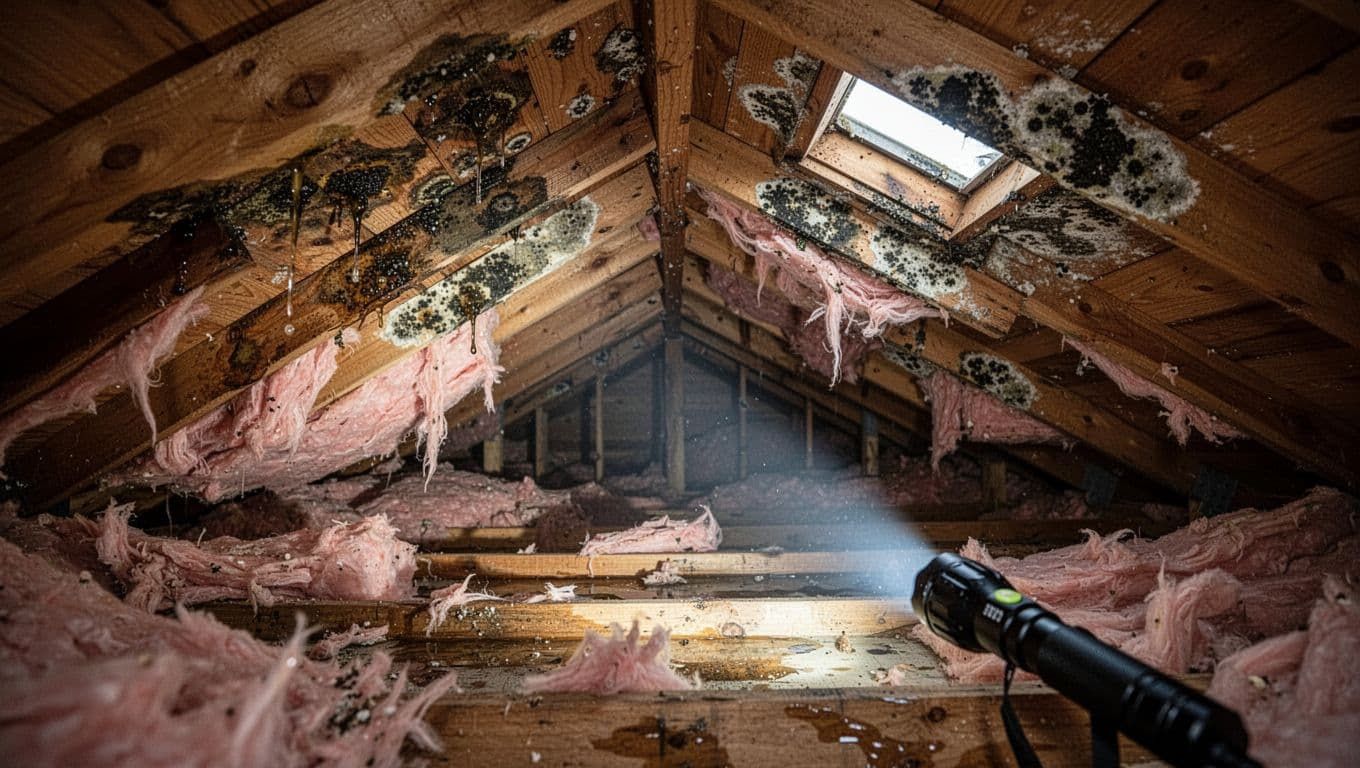
An attic leak can soak insulation and stain framing long before it shows up on a ceiling, created with AI.
What Storms Do To A Roof In Warren And Sterling Heights, And Why The Damage Gets Worse Over Time
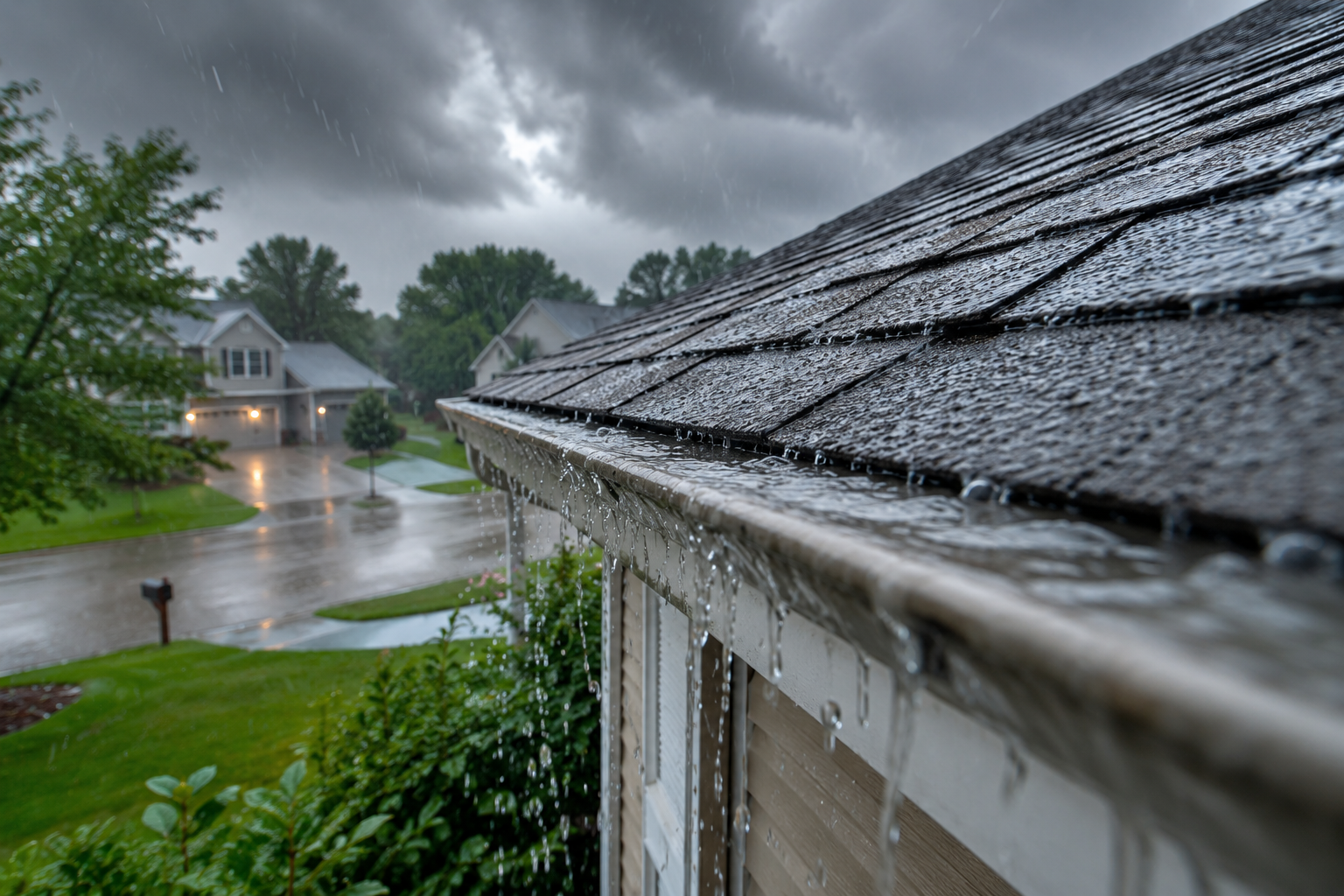
Metro Detroit weather doesn't "pick one season." We can get spring downpours, summer hail, fall wind gusts, and winter freeze-thaw cycles that keep working on the same weak spot.
That's why storm damage tends to get worse with time. A roof is layered like a jacket. Once the outer layer is torn, every storm after that pushes water deeper. Even when you don't see a leak, moisture can still sit in the roof system and cause rot, mold, and rusted nails.
Heavy rain is obvious, but wind is often the real starter. It lifts, flexes, and loosens shingles. Hail adds bruises that remove granules. Then winter arrives, water freezes in tiny cracks and opens them wider. A roof that "made it through" the first storm can fail on the second.
In Warren and Sterling Heights, we also see trouble around shaded eaves and slow-draining gutters. Snow melt refreezes at the edge, then builds ice. That trapped water can push under shingles and soak the wood.
The sooner we find the damage, the more options you keep. Small repairs stay small when the decking stays dry.
Wind Damage: The "Lift And Crease" Problem That Breaks Shingle Seals
Wind damage isn't always dramatic. Sometimes, the shingles are still there, but they don't lie flat anymore.
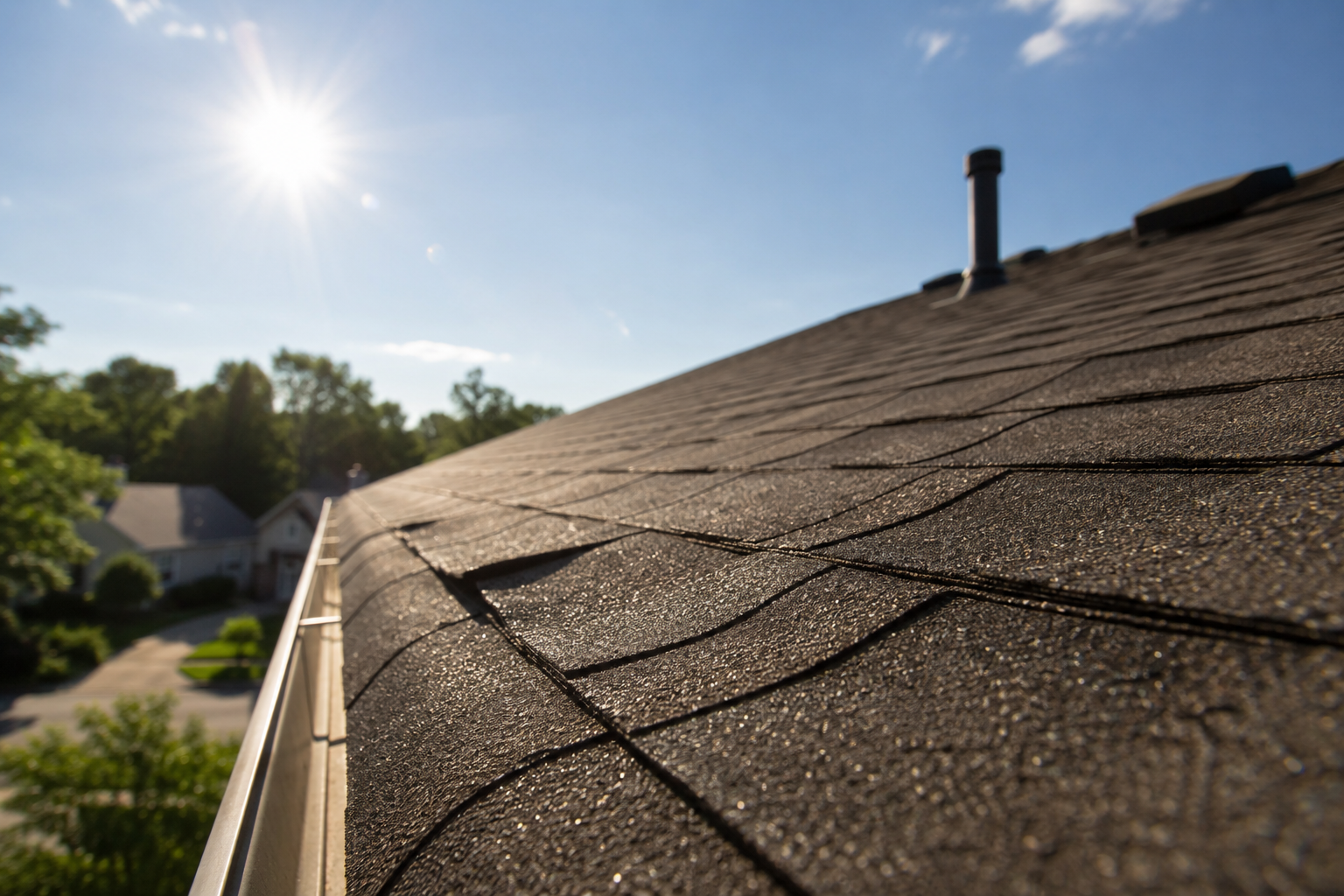
As wind hits the roof, it creates uplift at edges and peaks. Shingle tabs lift, the seal strip breaks, and the shingle can crease when it snaps back down. That crease becomes a path for water, especially during wind-driven rain. Even worse, once the seal is broken, the next gust lifts it easier.
We see this most on ridge caps, along rakes and eaves, and near valleys where airflow and water both concentrate. Roofs with multiple slopes, dormers, and complex lines can also have more "catch points" for gusts.
Age plays a role, too. Older shingles lose adhesion as the sealant dries out. That doesn't mean you need a full replacement every time, but it does mean storms can cause faster damage on a 15 to 20-year-old roof.
Hail And Ice: Bruised Shingles, Cracked Seals, And Clogged Drainage
Hail damage can be sneaky. From the street, shingles may look normal. Up close, we may find bruising where granules are crushed into the mat. Over time, those bruised spots shed granules faster and wear out sooner.
Hail can also dent metal vents, damage flashing edges, and crack rubber pipe boots. Those boot cracks are a common leak source because they sit right where water flows.
Then winter adds another layer of stress. Freeze-thaw cycles push water into small gaps, then expand it as it freezes. Tiny cracks become larger cracks. Nails can loosen. Seals can split.
Clogged gutters and downspouts make everything worse. When water can't drain, it backs up at the roof edge. During cold snaps, that backup can freeze, then keep refreezing into thicker ice. At that point, water can move under shingles instead of off them.
Our Step-By-Step Plan To Protect Your Home After Storm Damage
When homeowners call us after a storm, the biggest worry is usually the same: "Is this going to turn into a mess?" Noise, timing, cost, insurance, and the fear of being talked into the wrong fix all show up at once.
We keep the process steady and simple. We respond quickly, communicate clearly, and document what we find. Because we're licensed and insured, you can also feel confident you're hiring a team that takes safety and standards seriously.
Most importantly, we match the solution to the problem. Some homes need targeted repairs. Others need replacement because the damage is widespread or the roof is already worn out. Either way, we explain why, show evidence, and give you options.
Here's what you can expect when we're protecting your home in Warren, Sterling Heights, and nearby Metro Detroit cities.
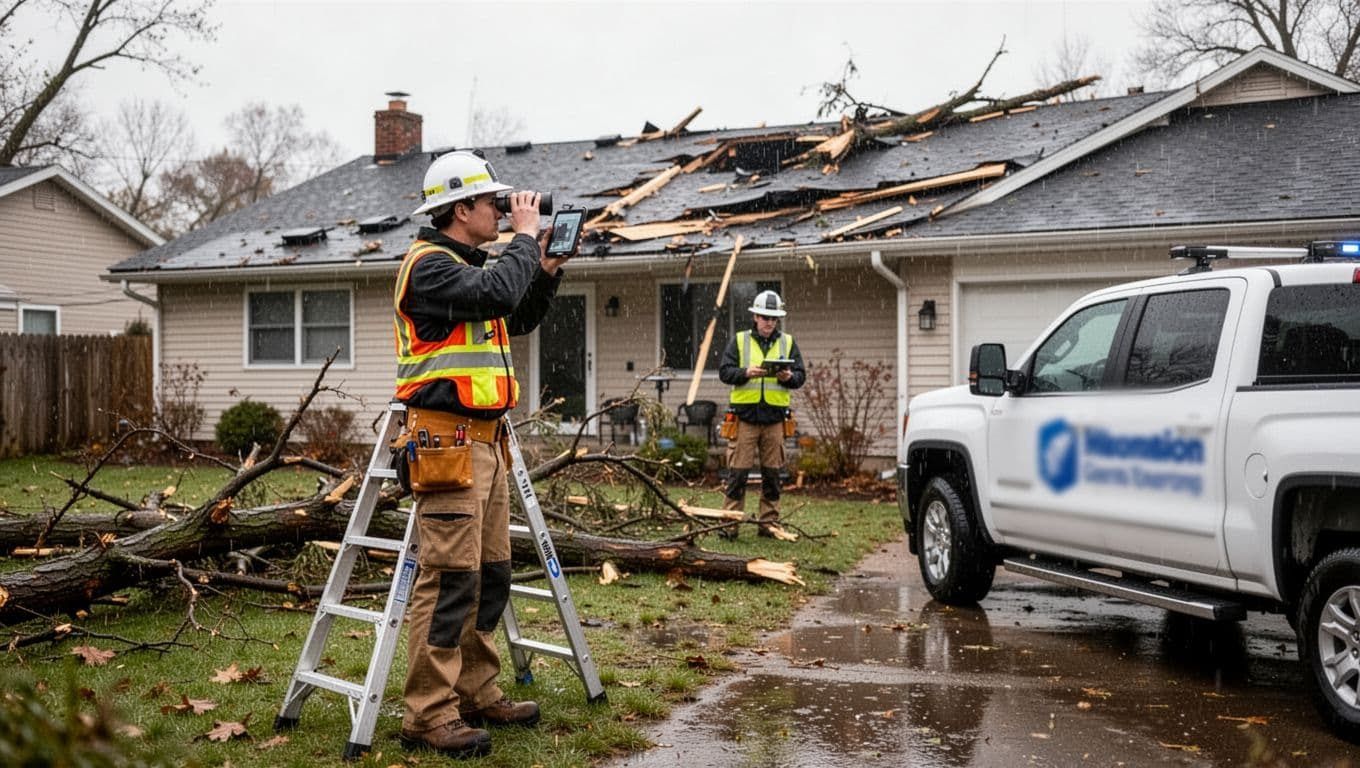
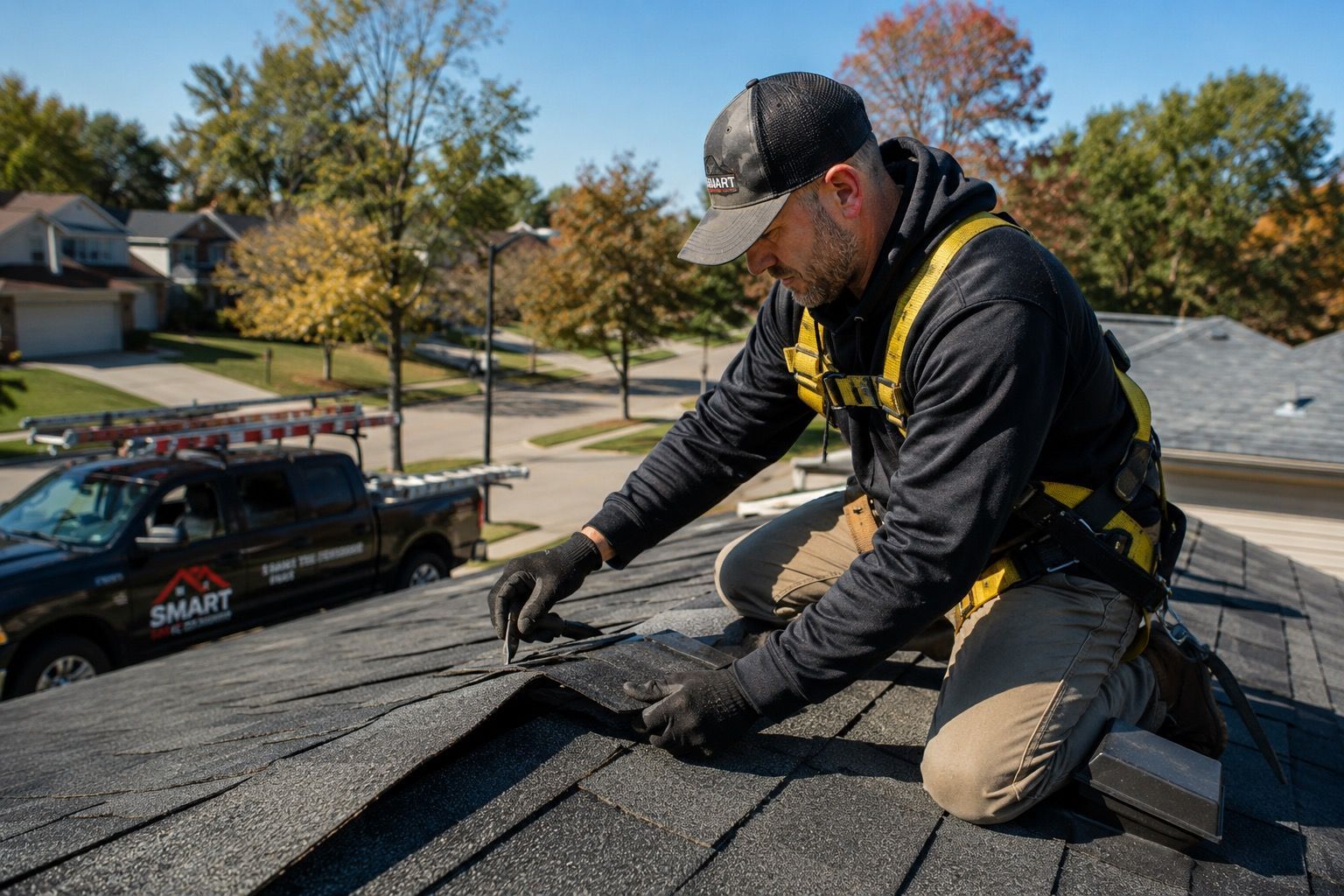
Our inspections focus on safety, documentation, and clear next steps, created with AI.
Free Storm Inspection, Photo Documentation, And A Clear Repair Or Replacement Game Plan
We start with a free storm inspection and treat it like a system check, not a quick glance. We document what we see so you aren't stuck taking anyone's word for it.
Our inspection typically includes shingles, flashing, ridge caps, valleys, vents, pipe penetrations, and signs of deck or fascia trouble. We also look for interior clues, like attic moisture, stains, or insulation issues. Ventilation matters, too, because poor airflow can raise the risk of moisture and ice problems.
Once we've gathered photos and notes, we lay out a clear plan:
- If you have active leaking, we prioritize stopping water intrusion first.
- If damage is localized, we discuss repair options and what to monitor next.
- If damage is widespread or the roof is near end-of-life, we walk through replacement and material choices.
If you want to learn more about what's included in our inspections and repairs, we point homeowners to our full roof inspections and repairs page. When replacement is the smarter long-term move, our roof replacement after storm damage details what the process looks like, including how we keep the job organized and the property clean.
We don't treat your home like a job site, we treat it like your home.
If Insurance Is Involved: How We Help You Avoid Common Claim Mistakes
Some storm damage ends up in an insurance claim. Others don't. Either way, we keep the advice practical and homeowner-first.
Right after a storm, a few simple moves can protect your claim and your house:
- Take photos of exterior damage, yard debris, and interior stains.
- Write down dates for the storm and when you noticed each issue.
- Save receipts for emergency supplies (tarps, dehumidifiers, fans).
- Prevent more damage when it's safe to do so, because most policies expect reasonable steps.
From there, we can provide documentation, explain the scope of work, and meet with an adjuster if needed. We can also help you compare repair vs. replacement based on what we find. What we can't do is promise coverage or control an insurance decision. We'll never sell you a guarantee we can't make.
Planning matters for families, too. So we talk through timelines, material choices, and warranty coverage in plain terms. If you're balancing work schedules, kids' routines, and weather windows, you deserve a clear calendar, not vague answers.
If you're in Macomb County and want a contractor who understands local storms and local building needs, we also serve homeowners through our
roofing services in Sterling Heights, MI area page.
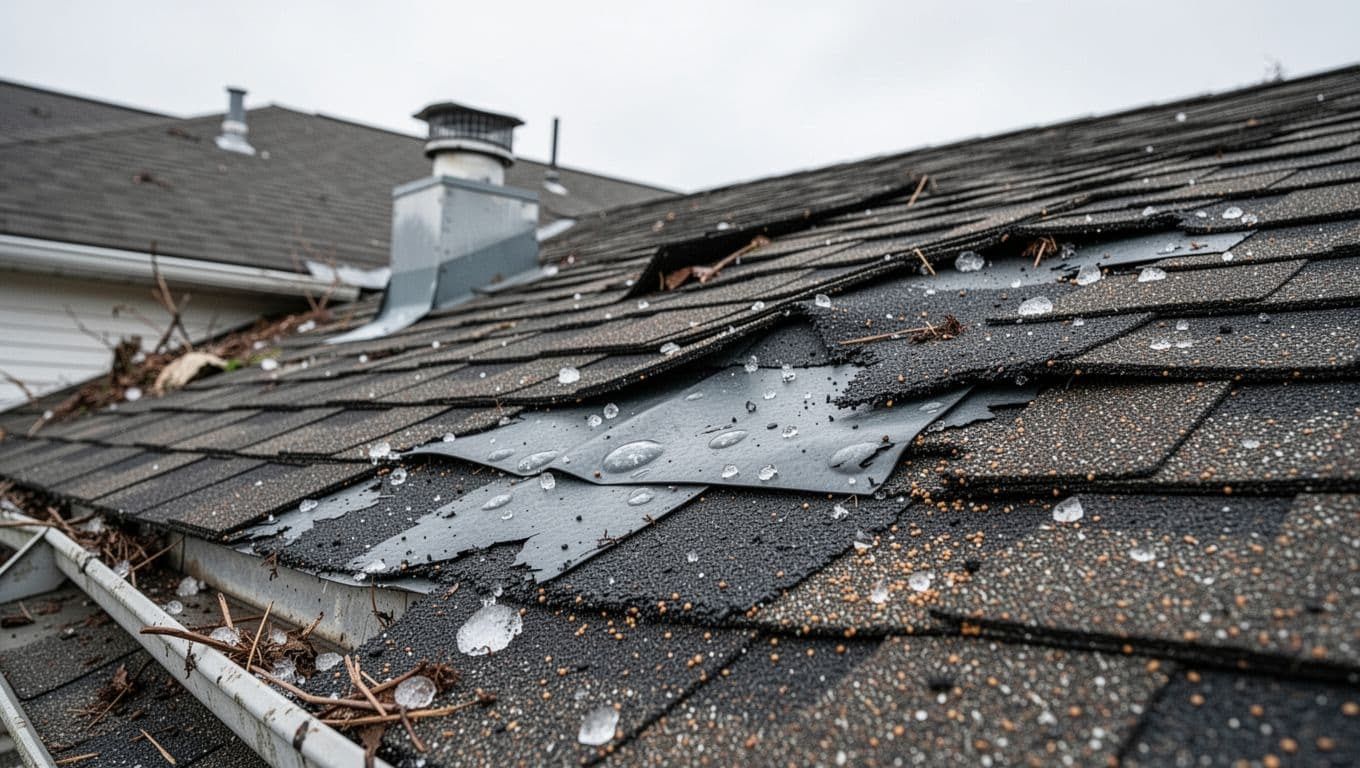
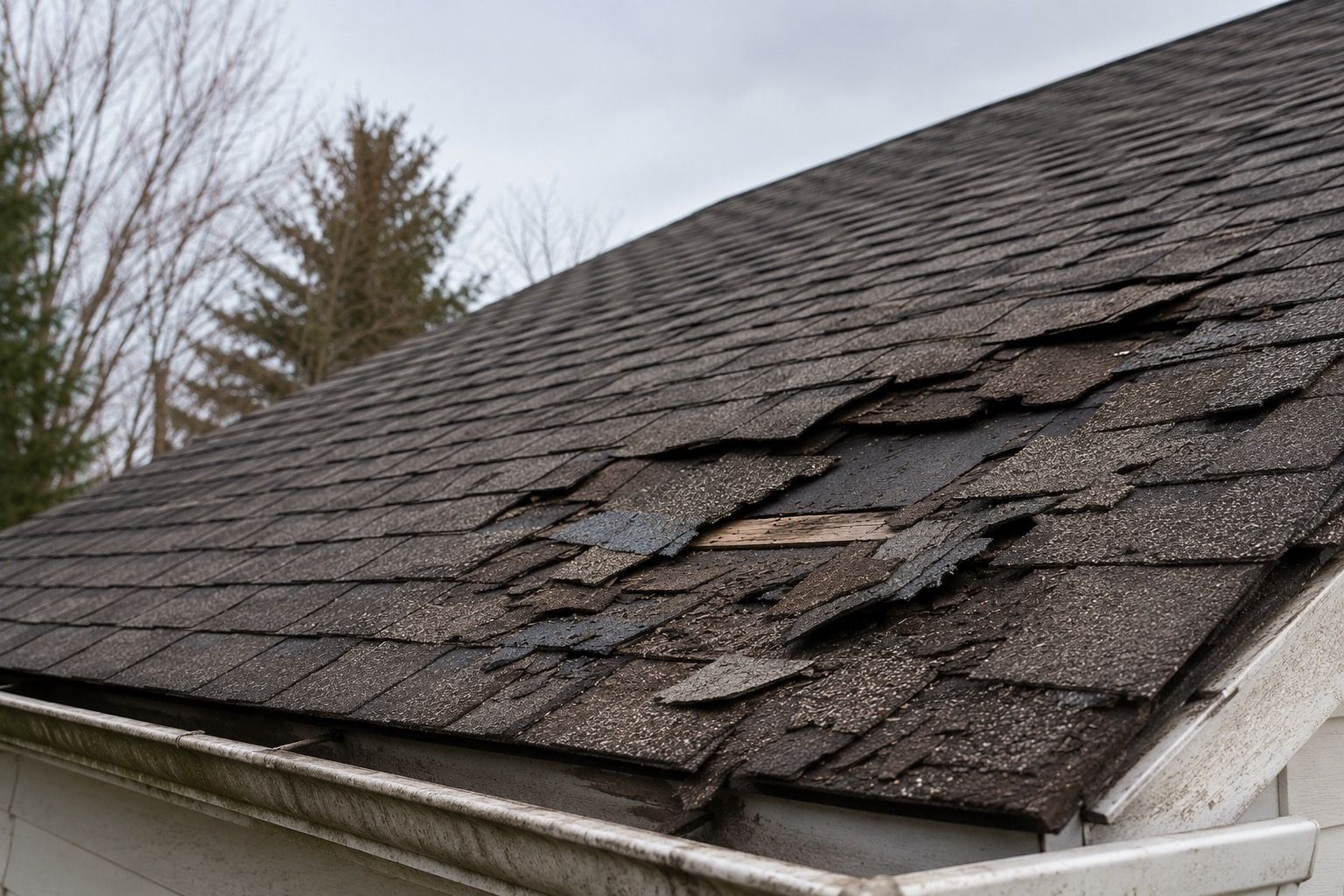
Wind creases and hail impacts can look minor, but they often shorten roof life, created with AI.
Conclusion
Storms in Warren, Sterling Heights, and Metro Detroit can damage a roof in ways we can't see from the street. Missing shingles are obvious, but creases, bruises, and flashing gaps often hide until water shows up indoors. That's why a fast inspection can prevent bigger costs later.
We're licensed and insured, and we keep the process simple: inspect, document, explain your options, then fix the real problem. If your home just went through high wind, hail, heavy rain, or ice, schedule a free inspection and get a clear plan. Start by requesting your free estimate through our
Smart Roof contact page in Warren, and let's protect your home before the next storm tests it again.