Why Humidity Can Cause Roofing Problems During Michigan Summers
How Long Does a Roof Last in Michigan?
Michigan weather is hard on roofs. Between lake-effect snow, freeze-thaw cycles that can happen a dozen times in a single winter, summer thunderstorms, and wind that rolls in off Lake Erie and Lake Huron, a roof in Southeast Michigan earns its keep every single year.
So how long should you expect yours to last — and how do you know when it's actually time to replace it?
The honest answer depends on what your roof is made of, how well it was installed, whether the attic below it is properly ventilated, and how the last few decades of Michigan weather have treated it. Here's what homeowners in Warren and the surrounding Metro Detroit area should know.
Average Roof Lifespan by Material in Michigan
Asphalt shingles: 20–30 years
Asphalt shingles are by far the most common roofing material on homes throughout Macomb County, Oakland County, and the rest of Southeast Michigan. A standard 3-tab shingle roof typically lasts 20 to 25 years under normal Michigan conditions. Architectural (dimensional) shingles, which are thicker and layered, often push 25 to 30 years when properly maintained.
The catch: Michigan's climate compresses that lifespan. Repeated freeze-thaw cycles cause shingles to expand and contract, which accelerates granule loss and cracking. A roof that might last 30 years in a milder climate may realistically reach the end of its useful life closer to 22 or 25 years here.
Metal roofing: 40–70 years
Metal roofing handles Michigan winters exceptionally well. Snow sheds naturally from metal panels, ice dams are far less likely to form, and the material itself doesn't crack or lose granules. The tradeoff is a higher upfront cost, but many homeowners view it as the last roof they'll ever install.
Wood shake: 20–25 years (with maintenance)
Wood shake roofs are less common in Warren and the surrounding area, but they still exist on older homes. They require regular maintenance — moss treatment, sealing, and occasional shingle replacement — and Michigan's wet springs and damp falls shorten their effective lifespan without it.
Flat/low-slope roofing (EPDM, TPO): 15–25 years
Some older homes in Macomb County have flat or low-slope roof sections, often over attached garages or additions. EPDM rubber membranes and TPO systems can last 15 to 25 years, but they're more vulnerable to pooling water and UV degradation over time.
What Shortens a Roof's Lifespan in Michigan Specifically
Even a properly installed roof can wear out faster than expected if a few Michigan-specific factors are working against it.
Poor attic ventilation. This is the single most common lifespan-killer for roofs in Southeast Michigan. In winter, heat escaping from a poorly ventilated attic warms the roof deck unevenly. Snow melts near the ridge, runs toward the cold eaves, and refreezes — forming ice dams that force water back up under shingles and into the home. In summer, a hot unventilated attic can exceed 150°F, which literally bakes the shingles from underneath and causes them to curl, crack, and age years faster than they should.
Inadequate insulation. Insulation and ventilation work together. Without enough insulation between the living space and the attic, heat keeps rising into the roof assembly, making the ventilation problem worse.
Installation shortcuts. A roof installed without proper underlayment, with improper nail placement, or without adequate flashing around chimneys, pipes, and wall junctions will fail years ahead of schedule. This is especially true in Michigan, where wind-driven rain and blowing snow probe every weak point a roof has.
Existing damage left unaddressed. A small shingle crack or a loose flashing seal that gets ignored through one Michigan winter can allow water into the roof deck. Once the deck is wet and begins to rot, the problem expands quickly, especially during spring thaw.
Age stacking with storm history. A 20-year-old roof that has also been through several significant hail or wind events may be at end-of-life even if it looks passable from the street. The cumulative effect of storm impacts on older shingles is often invisible from the ground.
Signs Your Roof May Be Nearing the End of Its Life
Age alone isn't always a reliable indicator. A 22-year-old roof that was installed correctly, has solid ventilation, and hasn't taken significant storm hits may still have years left. Meanwhile, a 15-year-old roof that was cheaply installed and has been through back-to-back storm seasons might already need replacing.
These are the signs that matter more than the calendar:
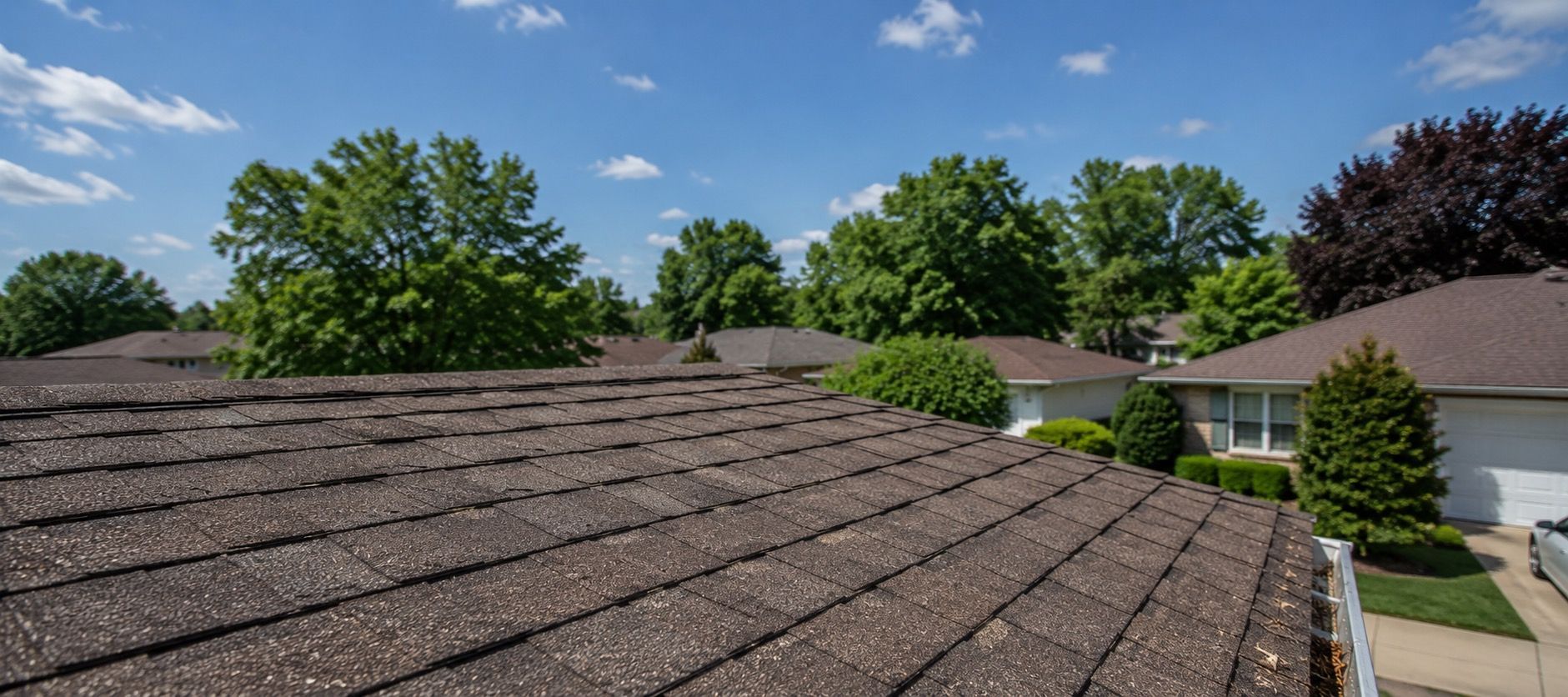
Granule loss. Asphalt shingles are coated with mineral granules that protect the asphalt layer underneath from UV exposure. When those granules start coming off — and you'll see them accumulating in your gutters or at the base of your downspouts — the shingles are aging out. Once the granule layer is significantly depleted, the underlying asphalt dries out and cracks.
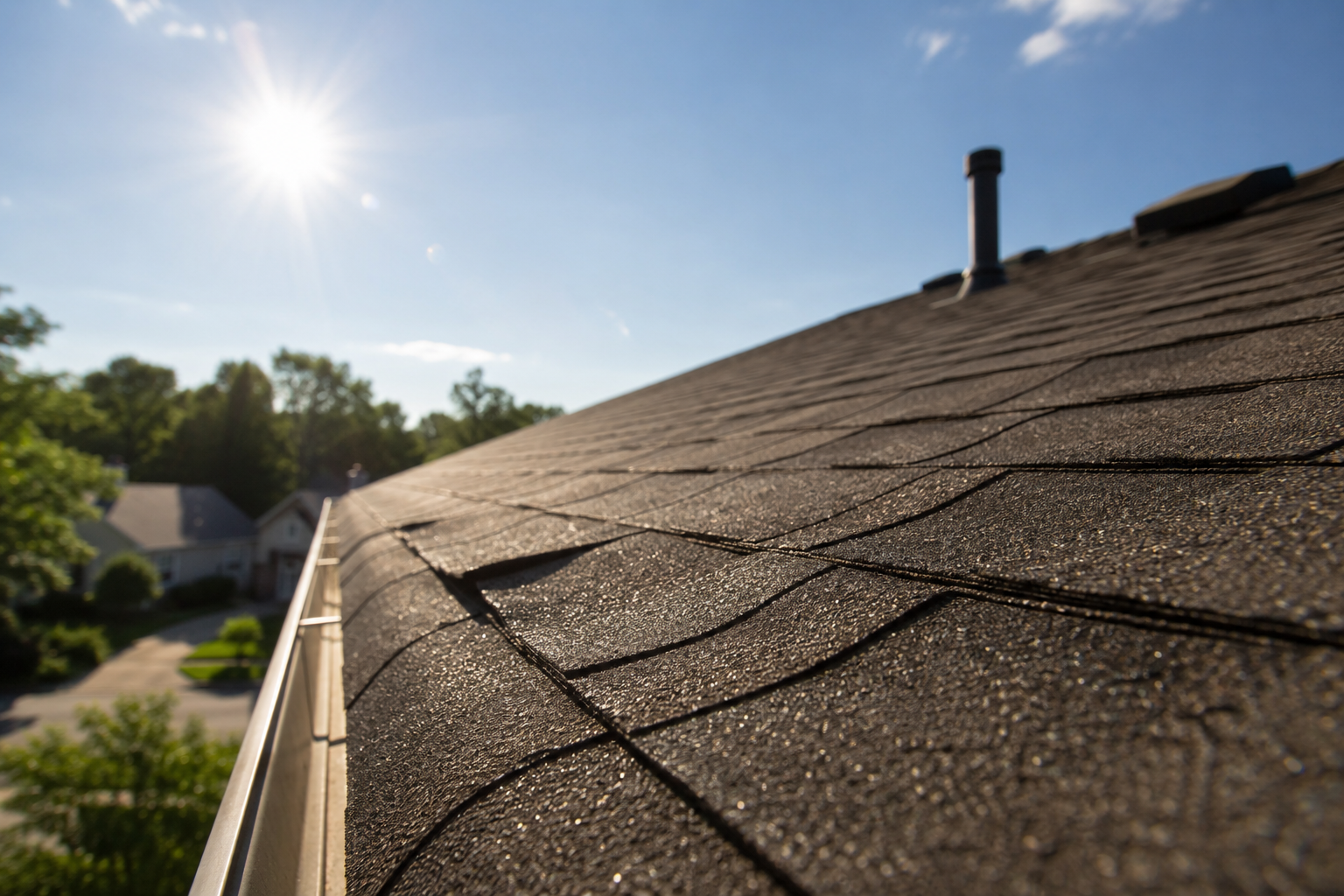
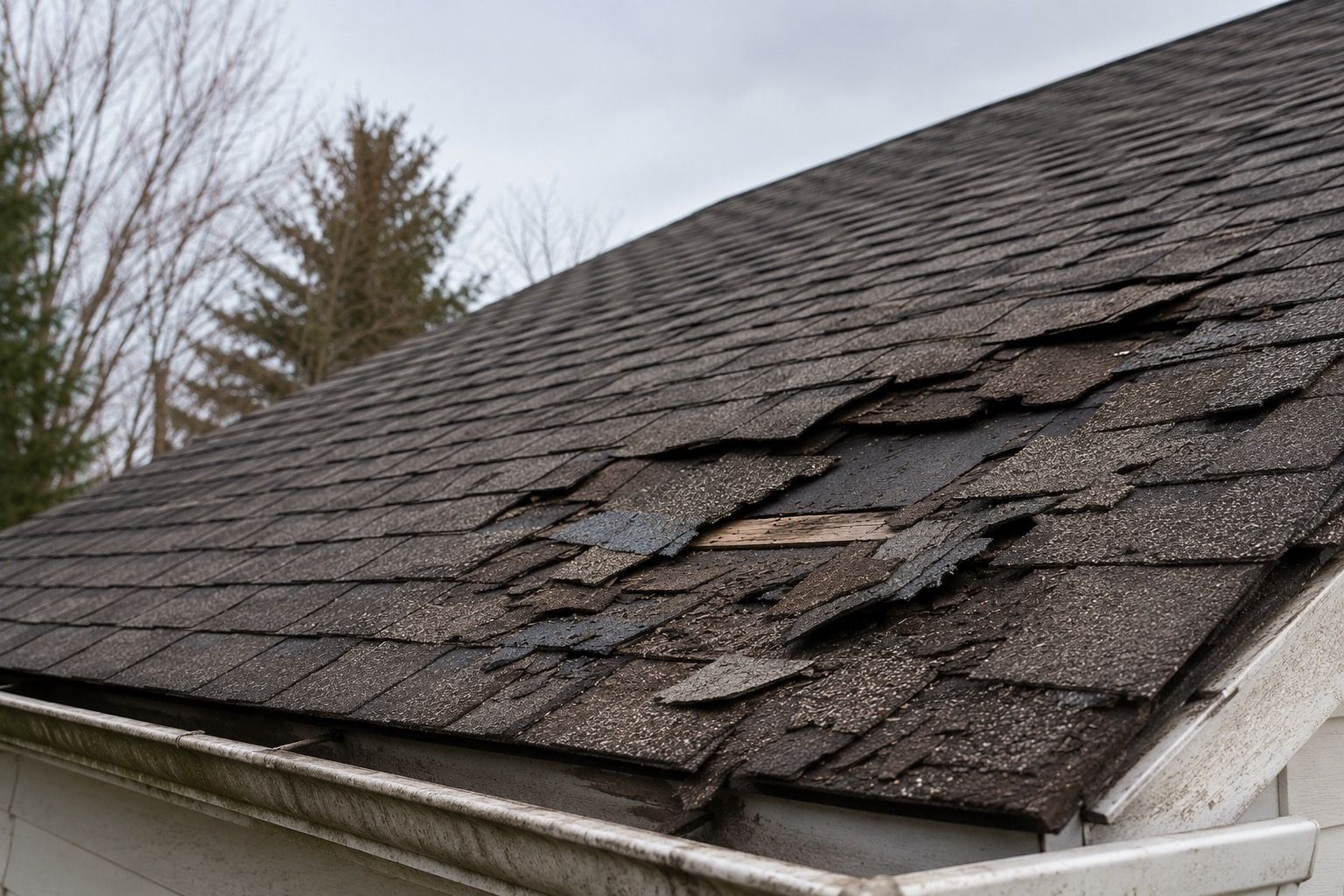
Curling or cupping shingles. Shingles that curl upward at the edges (cupping) or curl downward in the middle (clawing) are a sign of age, moisture imbalance, or poor ventilation. Either way, they're no longer lying flat and sealing properly — and every Michigan windstorm is a risk.
Visible cracking or brittleness. Asphalt shingles that have lost flexibility crack when temperatures drop. In Michigan, where temps can swing 40 degrees between a November afternoon and the following morning, brittle shingles don't last long.
Missing shingles. Wind pulls at the edges and tabs of shingles. On a younger, healthy roof, shingles resist this. On an older roof with dried-out sealant, they come off. One or two missing shingles can be repaired. Recurring losses across the roof after every storm season is a pattern worth taking seriously.
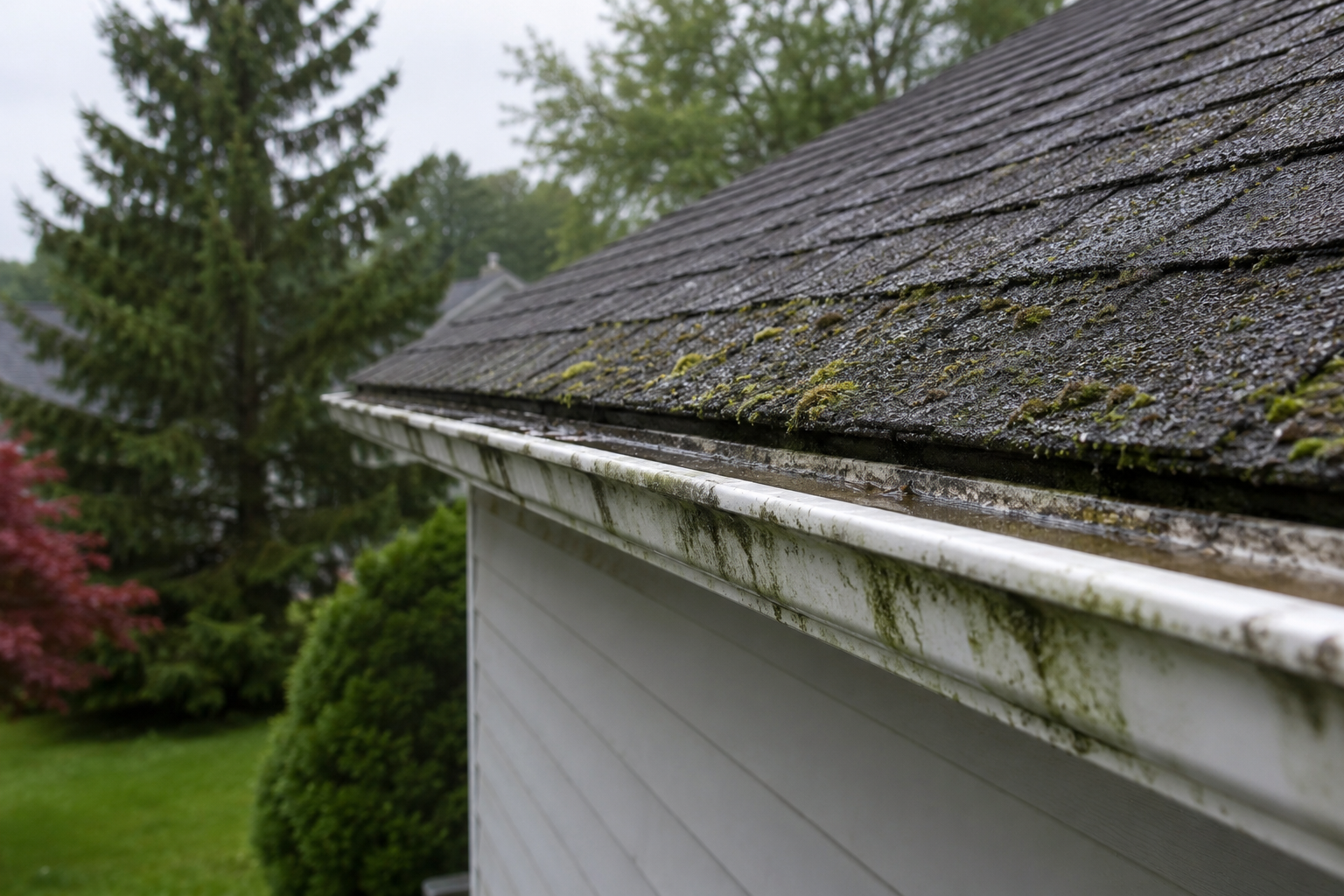
Dark streaking or moss growth. Black streaks on shingles are typically algae. Moss and lichen hold moisture against the shingle surface, which accelerates deterioration. These are more of a maintenance issue on younger roofs but become more significant as the roof ages.
Water stains on attic sheathing or ceilings. Any water intrusion that has reached the attic decking or made its way to interior ceilings means the roof envelope has been breached. The visible stain is often not directly below the entry point — water travels — so the source needs to be professionally traced.
Sagging sections. Any area of the roof that sags or feels soft underfoot is a structural concern. This typically points to decking damage or rafter issues below the shingles and should be evaluated immediately.
How Michigan's Climate Affects the Repair-vs-Replace Decision
One question homeowners often ask is whether a repair will buy meaningful time or whether it's just delaying the inevitable.
The general rule: if your roof is under 15 years old and the damage is isolated — a few missing shingles, a failed flashing seal, one section affected by a tree branch — a targeted repair usually makes sense. You're extending the life of a roof that has significant lifespan remaining.
If your roof is 20 years or older, has widespread granule loss or curling, and has been through multiple Michigan storm seasons, repairs often make sense only as a temporary measure. Patching one area of an aged roof doesn't refresh the surrounding shingles, which are aging on their own timeline. A repair that costs $800 today might hold for two years before the next section fails.
A professional inspection gives you a real answer. A good contractor will tell you honestly whether your roof has meaningful life left or whether the math favors replacement — and they'll show you what they're seeing rather than just telling you.
What to Expect From a Roof Replacement Timeline in Warren, MI
For homeowners in Warren and the surrounding Macomb County and Oakland County communities, most residential roof replacements take one to three days from start to finish, depending on the size and complexity of the roof.
The process typically involves removing the existing shingles and underlayment, inspecting and repairing any damaged decking, installing new underlayment and ice-and-water shield (especially important at the eaves in Michigan, where ice dams are a real risk), and then installing the new shingle system.
Spring and early summer tend to be the busiest seasons. If you're planning ahead, scheduling in late summer or early fall often means better availability and — once temperatures cool — competitive pricing from contractors looking to fill their schedule before the season ends.
How Long Will Your Specific Roof Last? Get a Professional Answer.
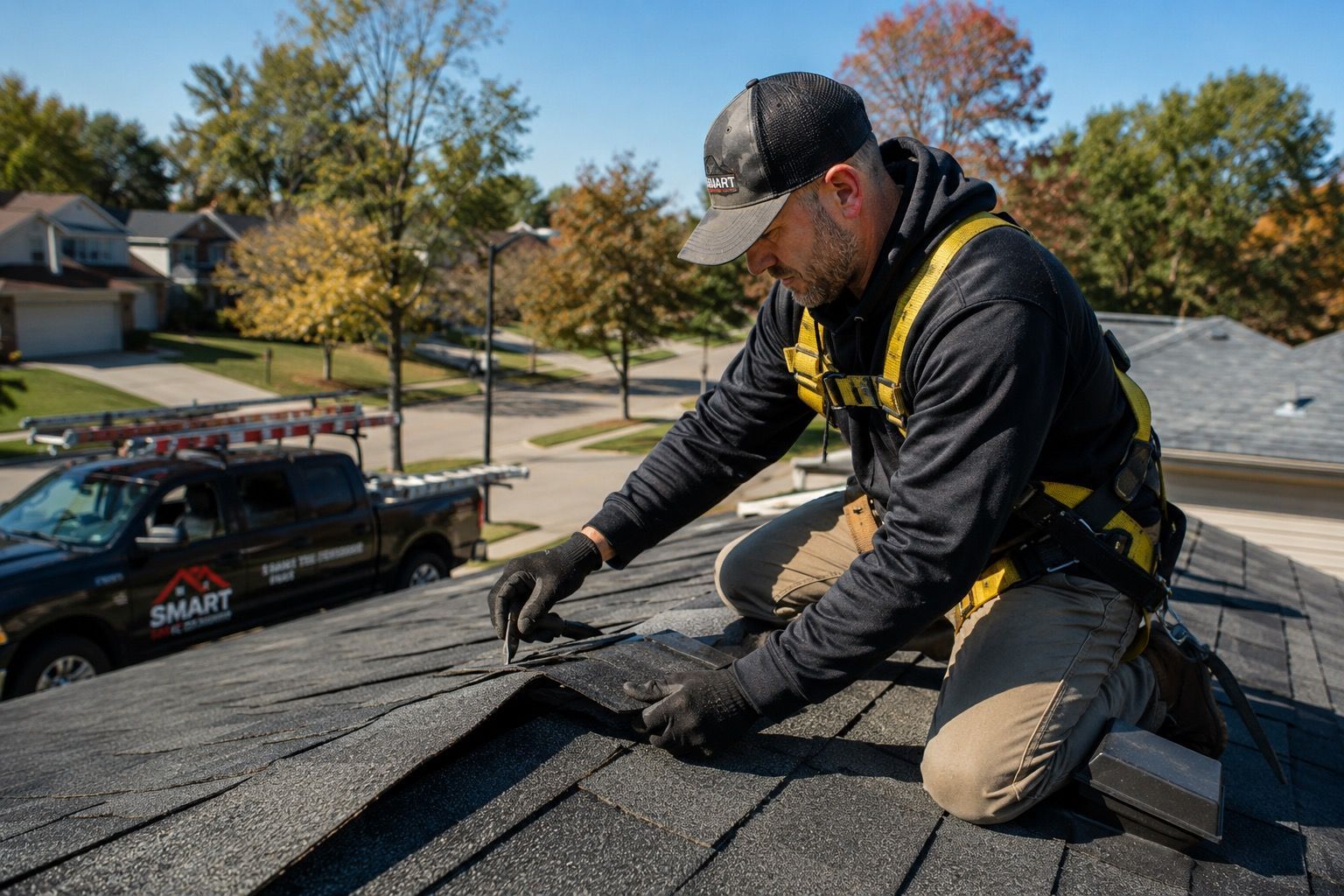
There's no substitute for having someone actually look at your roof. A visual inspection from the ground tells you very little — granule loss, soft spots in the decking, flashing failures, and early signs of moisture intrusion are only visible up close.
At Smart Roof LLC, we've been inspecting and replacing roofs for homeowners across Warren, Sterling Heights, Troy, Clinton Township, and the surrounding Metro Detroit area for over 26 years. Our inspections are free, there's no pressure, and we'll give you a straight answer about what we find.
If your roof is getting close to 20 years old, has been through significant storm seasons, or you've noticed any of the signs above, it's worth knowing where you stand before a problem forces the decision for you.
Call (248) 579-4272 or schedule your free roof inspection online.
New Paragraph